

The Cheap Guitar Paradox
A three-thousand-dollar guitar really is better than a two-hundred-dollar one. A beginner can't yet hear what they're paying for, and some cheap guitars are good enough to stop being the reason the student isn't progressing. That changes the math entirely.
A three-thousand-dollar guitar is better than a two-hundred-dollar one. That's not in dispute — it has better wood, better electronics, a cleaner setup, it sounds richer, and it plays easier. Every part of it is more instrument. Ask any working musician to compare the two blind and they will tell you the difference in thirty seconds. The expensive guitar wins on merit.
It wins on merit, and it is still the wrong thing to buy first.
The sensor you can't yet read
The premium guitar is a sensor — a fine one. It resolves detail the cheap instrument can't. A great acoustic reveals the physics of the string, the room, the fingertip. A great electric reveals the hand on the pick, the exact moment of attack, the microscopic differences in how you bend into a note.
But all of that detail has to land somewhere. It lands on the ear. And the beginner's ear, plainly, is not yet built to receive it. Hand a student a $200 Squier and a $3,000 custom Telecaster, and more often than not they cannot tell you which is which. The difference is real — but it requires a trained listener to register, and the trained listener has to be built by hours, not bought by dollars.
Buying the premium guitar before the ear exists is like buying a microscope before you know what you're trying to see. The optics are excellent. You still can't see anything.
Good enough is a specific bar
There is a minimum bar a first guitar has to clear. It needs to hold its tuning. It needs a playable action that doesn't cripple the fretting hand. It needs to intonate reasonably across the neck. It needs to not actively fight the student.
Twenty years ago that bar was expensive. A cheap guitar was often genuinely unplayable — warped necks, unusable electronics, tuners that drifted every four bars. You had to spend to clear the bar.
That's no longer true. Manufacturing has collapsed the cost of "good enough." A new beginner today can walk into a store with two hundred dollars and walk out with a guitar that clears the bar with room to spare. It is not better than the premium instrument. It is good enough to stop being the reason the student isn't progressing.
The decision the beginner is actually making is not good guitar vs. bad guitar. It's good-enough guitar plus real instruction vs. expensive guitar plus no instruction. The first combination makes guitarists. The second makes collectors.
What the money is actually buying
A student who spends twenty-five hundred dollars on a first instrument is rarely buying the instrument's acoustic or electrical superiority. They cannot yet use that superiority. What they're buying is the feeling of being a real player — the aesthetic of commitment, the signal to themselves and to others that they are serious. That feeling is not worthless. It is also not the same as progress.
The fingers don't know anything they didn't know yesterday. The money didn't change that. Structured practice changes that. Instruction changes that. Hours change that.
Some cheap guitars that clear the bar
Three that I'd put in a beginner's hands without apology. They are not as good as a hand-wired Tele or a vintage Martin. They are good enough that the guitar will not be the bottleneck.

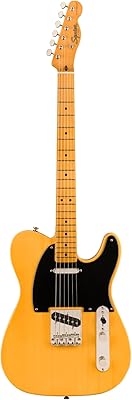

Each of these is, in the strict sense, a worse guitar than the high-end version of the same thing. And each is good enough that the instrument isn't the reason the student isn't improving.
The upgrade sequence
Ear first, hands second, instrument third. Reverse the order and you produce a very specific kind of intermediate player: the one who has spent ten thousand dollars on gear and still cannot sight-read a lead sheet. The problem isn't that their guitars aren't good enough. The problem is that they bought sensors before they could read.
The premium instrument becomes legitimately worth its price when the ear has grown enough to register what makes it premium. At that point the upgrade pays for itself — the player can hear the resolution, the tone, the responsiveness, and the guitar genuinely lifts their playing. Before that point, it's paying a premium for something you can't use yet.
You don't deny yourself the premium guitar forever. You earn the right to hear the difference by putting in hours on a good-enough one.
What to do with the money you didn't spend
Spend it on time. Time with a teacher, time with a structured curriculum, time practicing. A good-enough guitar plus a real learning system will make a guitarist out of you inside two years. An expensive guitar without that system will not. The structure is what compounds — a specific thing to do with the fingers, today, right now, that builds on what you did yesterday.
That's the pitch for the Axesense Method — forty-four interactive lessons that assume nothing about what you already know and withhold nothing about what you need to learn. $39.99 once, lifetime access. Roughly the price of a set of decent strings. It is, literally, the rest of the money you didn't spend on a guitar you couldn't yet hear.
Or, if you're in Austin and want to be seen in person — book a private lesson. Fifty dollars a session, beginner through advanced.
Got this from a friend? Subscribe to the Journal — new pieces most weekdays, no spam, free to read.
Already in? Forward it to a guitarist who'd dig it.
Affiliate disclosure: links to Amazon products above are affiliate links. If you buy through them, I earn a small commission at no additional cost to you. I only link to gear I'd actually put in a student's hands.